Services
Post-Renovation Cleaning
A home after works needs more than a mop. We remove construction dust from every surface, paint and filler residue — and hand over a space ready to live in.
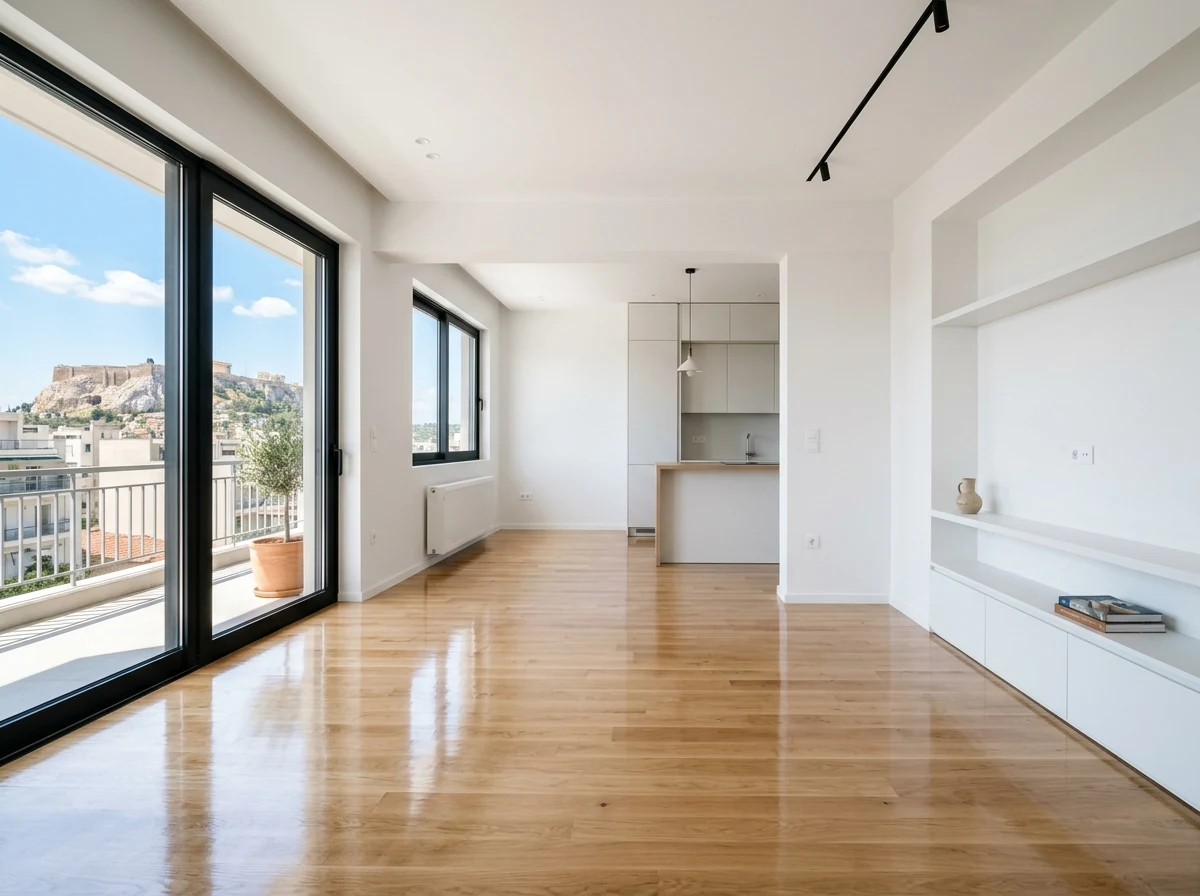
What is post-renovation house cleaning and how does it differ from a general cleaning
Specialised post-renovation house cleaning differs radically from an ordinary general house cleaning, as it targets the complete removal of construction-material residue and microparticles. Construction dust contains fine particles of gypsum, cement and crystalline silica, which can cause respiratory problems and allergies in residents. At the same time, the airborne dust particles penetrate the internal components of air conditioners and electrical appliances, causing boards to overheat or short circuits. What is more, dry-wiping cement dust with ordinary cloths acts as an abrasive, permanently scratching new glass panes and delicate floors.
The use of an ordinary household vacuum proves inadequate, as the fine silica dust instantly clogs the micro-pores of the filters, leading to a burnt-out motor and much of the dust being re-emitted into the air. By contrast, a professional post-works cleaning requires an industrial vacuum with an H13 or H14 class HEPA filter, which captures 99.97% of particles down to 0.3 μm in diameter. Combined with special safety scrapers with replaceable blades for adhesives and paints, an initial house cleaning by specialised staff ensures the complete protection of the property.
Costs and prices for post-renovation cleaning in 2026
The cost of post-renovation house cleaning in 2026 ranges from €2.00 to €3.50 per m², plus 24% VAT. Every specialised cleaning company shapes its flat-cleaning quote on the basis of the square metres and the construction residue.
| Property type / size | Indicative duration | Average cost (2026) | Basic tasks |
|---|---|---|---|
| Two-room flat (50–60 m²) | 4–6 hours | €150 – €200 | Frames, floors, sanitary ware |
| Three-room flat (80–90 m²) | 6–8 hours | €210 – €280 | Full dust removal, cabinets |
| House (100–120 m²) | 8–10 hours | €260 – €360 | Floor scrubbing, windows, skirting |
Key highlights
- Complete removal of construction residues, paints, and putties.
- Safe elimination of fine construction dust (gypsum, cement).
- Prevention of scratches and damage to delicate floors and new glass.
- Protection of electrical appliances and AC units from overheating.
- Use of industrial vacuums (HEPA) and specialized cleaning agents.
- Creation of a perfectly hygienic environment before moving in.
Prices per square metre (€/m²) and indicative packages
Pricing by the square metre (€/m²) offers the greatest transparency for the owner looking for a reliable cleaning company. For a light cleaning after a simple refresh, the cost per m² ranges from €2.00 to €2.40, while after a full renovation it settles at €2.80 to €3.50/m². For a typical two-room flat of 50–60 m², the renovation flat-cleaning price is set at €150–200, for a three-room flat of 80–90 m² at €210–280, while cleaning a home of 100 to 120 m² comes to €260–360. The basic house cleaning packages include glass panes, frames, skirting boards, cabinets and floors, while additional tasks such as washing roller blinds, awnings or mattresses are charged extra upon a written quote.
Factors that shape the final price of the job
The formation of the final price for a professional post-renovation cleaning is determined by specific technical parameters and the degree of difficulty of the job. While the total square metres (m²) of the property form the basis of the calculation, the degree of soiling directly affects the required labour hours. The specialised removal of construction-material residue, such as epoxy grouts and paint remains, calls for special solvents. In addition, aluminium frames and glass panes with stuck-on protective film, or high-ceilinged flats above 3 metres in old buildings, increase the working time by 20% to 30%. An on-site survey of the space by the cleaning company therefore ensures accurate pricing without unforeseen charges.
Additional tasks and extra charges
Beyond the basic surface cleaning, specialised supplementary tasks are billed separately depending on the needs of the space. Debris removal requires an approved alternative-management system, with renting a debris skip costing from €100 to €180, since dumping in municipal bins incurs fines. At the same time, the deep biological cleaning of furniture and mattresses with extraction machines costs €30–60 per item for the removal of microparticles. Finally, cleaning awnings and outdoor spaces with a pressure washer comes to €30–50 per balcony, completing the final handover package.
Professional equipment and cleaning materials
The specialised professional equipment for renovation cleaning ensures the complete elimination of construction dust and stubborn residue. High-performance systems from leading manufacturers such as Kärcher Professional and Nilfisk guarantee excellent hygiene results without damage to sensitive surfaces.
Industrial HEPA vacuums and single-disc machines (scrubbers)
The combination of an industrial vacuum with certified HEPA filters and a single-disc machine is the cornerstone of professional cleaning. Certified H13 and H14 class filters retain up to 99.97% of the fine silica dust and gypsum particles. By contrast, a conventional household vacuum clogs immediately and risks motor destruction from the airborne construction debris.
At the same time, the rotary single-disc machine (scrubber) uses specialised cleaning pads with colour coding. The hard black pads aggressively remove cement slurries from hard-wearing ceramic tiles, while the soft red or white ones safely clean and polish delicate marble and mosaics.
Specialised cleaners for removing adhesive, grout, paint and cement
The safe elimination of construction residue requires the targeted use of chemical cleaners based on the pH index and the type of substrate. For acid-resistant porcelain tiles, buffered acidic formulations are used, which dissolve salts and cement slurries without corroding the grout. Conversely, the use of common hydrochloric acid is strictly forbidden on marble, limestone rocks and aluminium profiles, as it causes irreversible chemical burns and dulling. For tape adhesives and silicones on frames, neutral pH-7 solvents are applied.
| Type of residue | Indicated cleaner / pH | Compatible surfaces | Strict contraindication |
|---|---|---|---|
| Cement & grout | Acidic pH < 2 | Porcelain tiles, ceramics | Marble, mosaics, natural stone |
| Silicone & tape adhesive | Special silicone solvent (pH 7) | Glass, aluminium, PVC | Painted walls without a test |
| Paints & grouts | Alkaline / Neutral (pH 7-9) | Tiles, glass, metals | Anodised aluminium |
For inhabited spaces, ecological and hypoallergenic cleaners with the appropriate certifications are preferred. These low-VOC biodegradable products ensure immediate and safe occupancy without harmful fumes for children and pets.
A complete step-by-step cleaning guide (Top-to-Bottom)
An effective post-renovation cleaning guide is based unfailingly on the Top-to-Bottom strategy, which prevents the secondary contamination of surfaces by construction dust. This methodology defines five strictly consecutive house cleaning steps, ensuring complete elimination of construction residue with maximum time savings.
Step 1: Removal of debris, packaging and protective films
The first decisive phase of the process begins with the complete removal of bulky construction waste and protective packaging materials. All rubble is gathered in reinforced heavy-duty 50-kilo debris sacks and transferred to certified inert-waste skips, in accordance with environmental legislation.
At the same time, the immediate removal of protective films from aluminium frames is critical, as ultraviolet radiation crystallises the acrylic adhesive within 15 days, causing permanent alteration. Before the final removal, sorting and storing a stock of 2–3 m² of tiles and a few litres of paint for future repairs is recommended.
Step 2: Cleaning of the ceiling, light fixtures, walls and air conditioners
The second step focuses on eliminating fine dust from the highest points of the property, including the ceilings, light fixtures and air-conditioning systems. The work begins with dry vacuuming via an industrial vacuum with an H13 HEPA filter, capable of retaining 99.95% of plasterboard microparticles down to 0.3 microns in size.
Next, telescopic poles with electrostatic microfibre cloths trap the residue from masonry and recessed LED spots, preventing them from overheating. In addition, the washable filters of the air conditioners are removed for a deep cleaning and disinfection of the units, so that the toxic dust is not recirculated the first time they are switched on.
Step 3: Detailed cleaning of frames, windows and roller shutters
The thorough cleaning of frames, windows and external roller shutters requires specialised techniques to avoid irreversible damage to the new surfaces. For removing paint, grout and silicone from the glass panes, a professional glass scraper is used exclusively at a 30° angle over plenty of soapy water, eliminating the risk of scratches.
On aluminium frames, the rails of the sliding sashes and the drainage holes are thoroughly cleaned with narrow vacuum nozzles and steam. Finally, the external roller shutters are degreased with neutral cleaners, while the EPDM rubber gaskets are conditioned with silicone spray to ensure maximum thermal and watertight sealing.
Step 4: Disinfection of the kitchen, bathroom and sanitary ware
The disinfection of the sanitary spaces and the kitchen is the most demanding stage, as it combines the elimination of toxic dust with the need for absolute microbiological cleanliness. On ceramic tiles, cement-based grout residue is removed with specialised controlled-action acidic cleaners, after a test on an inconspicuous spot has been carried out first.
For the deep disinfection of porcelain and grout, dry steam is applied at a pressure of 4–6 bar at 120°C–140°C. Conversely, on chrome taps and Inox sinks, acidic solutions are strictly forbidden and exclusively pH-7 neutral detergents and microfibre cloths are used, protecting the chrome coatings from oxidation.
Step 5: Deep cleaning, scrubbing and mopping of floors
The final stage of the process focuses on the floors, where the slightest wrong move can turn the construction dust into a stubborn white emulsion. Before any water is applied, a thorough dry vacuuming with an H14 HEPA industrial vacuum precedes, preventing the cement dust from penetrating the pores.
Next, the washing is carried out with a single-disc machine or a twin-bucket system, changing the rinse water every 15–20 m². For hard-wearing porcelain tiles, acidic scale-removal cleaners are chosen, while on natural marble, mosaics and wooden parquet, exclusively pH-7 neutral solutions are mandatory, protecting the polish from chemical corrosion.
The critical “hidden” spots that need attention
A thorough post-renovation cleaning demands strict inspection of the hard-to-reach spots of the home, where airborne PM10 and PM2.5 construction dust is massively trapped. The following critical zones determine the final quality.
Inside cabinets, drawers and skirting boards
The full removal of drawers from their runners is necessary, as the sliding mechanism and the empty space behind them collect large quantities of plasterboard dust. A dry cleaning is required first, followed by a wipe with microfibre cloths of at least 300 g/m² density, avoiding excessive moisture on the untreated MDF and chipboard wooden parts.
The disinfection of the hinges and internal shelves is completed before household equipment is installed. At the same time, the perimeter skirting boards are thoroughly cleaned along their top edge with special scrapers to remove grout and masking-tape residue, without wearing away the new paint.
Radiator bodies, vents and tile grout
The internal fins of radiators and the mesh of vents act as natural filters that trap plaster and paint microparticles. If a deep blow-out with compressed air or a steam cleaner is not carried out, an intense smell of burnt dust rises the moment the winter heating is switched on. Aluminium vents with fibreglass mesh are carefully dismantled and washed with plenty of running water, while the window tracks are cleaned without wire brushes that scratch the electrostatic paint. At the same time, the porous tile grout is mechanically scrubbed with narrow polypropylene brushes and neutral cleaners.
In the outdoor spaces, the cleaning of balconies and terraces is carried out top-to-bottom to prevent particles being carried inside. The metal and aluminium railings are rid of facade drips with special non-corrosive solvents, while the marble and tiled surfaces are washed with 110–130 bar pressure rigs. Finally, the external gutters and awning rails are checked and carefully cleaned of accumulated cement slurry to definitively prevent blockages during rainfall.
DIY vs a professional cleaning crew: a comparison
The choice between a cleaning crew or doing it yourself after a renovation is determined by the scope of the work, the protection of the materials and the comparison of DIY cleaning costs against specialised services.
When it is worth doing it yourself
A do-it-yourself cleaning is a sensible and economically efficient solution exclusively in cases of limited cosmetic interventions, such as a local refresh of walls or the isolated replacement of interior doors. For DIY protection from construction dust, an FFP2 mask, protective goggles and nitrile gloves are mandatory. Removing paint residue is done with safety scrapers and dense microfibre cloths. However, an ordinary household vacuum is forbidden for gypsum dust due to the risk of motor burnout, making the method viable only up to 25–30 m².
When a specialised crew is necessary
The assistance of a specialised cleaning crew becomes absolutely necessary in cases of a full renovation, where the volume of microcrystalline dust and construction residue poses risks to health and materials. After demolitions, crews deploy H13/H14 HEPA industrial vacuums, capturing 99.97% of particles. At the same time, the removal of grout from porcelain tiles and of epoxy residue prevents permanent damage to natural wood and thermal-break aluminium frames. The job is delivered in a single shift, ensuring immediate occupancy for vulnerable groups and allergy sufferers.
How to choose the right cleaning company and the booking process
Choosing a specialised company for post-renovation cleaning requires an assessment of certifications and public liability insurance. A proper booking process ensures binding prices, transparency in the contract and a flawless final result.
Selection criteria: guarantees, reviews and certifications
Choosing the right post-renovation cleaning company demands a strict check of certifications, reviews and legal guarantees to avoid unforeseen damage. A key criterion is active public liability insurance covering marble surfaces, parquet and aluminium profiles in the event of damage or poor workmanship. At the same time, ISO 9001:2015 and ISO 14001 certifications guarantee trained staff and approved chemicals.
On digital platforms and in Google Reviews, the company should maintain a high rating. A written guarantee of a free re-visit within 24 to 48 hours before the final deposit is also required.
How to ask for a quote and what to watch for in the contract
To avoid unforeseen charges and misunderstandings, assigning a post-renovation cleaning should be based on a written and binding all-inclusive quote. The agreement must describe the tasks in detail — such as the cleaning of cabinet interiors, grout and walls — setting an explicit delivery schedule.
Transactions in 2026 are carried out safely via IRIS, POS card or bank deposit with an official receipt and 24% VAT. Avoid vague hourly charges without a ceiling, and sign the handover only after an exhaustive quality inspection in natural daylight.
Frequently asked questions about post-renovation cleaning
How long does post-renovation cleaning take?
Regarding the duration of the work, a typical flat of 80 to 100 m² requires on average 5 to 8 hours of intensive work by a specialised crew of 2 to 4 people. In larger homes above 120 to 150 m², or in spaces heavily burdened with plaster, paint and cement residue, the process can take a full working day of 8 to 10 hours.
When should post-renovation cleaning be scheduled?
Post-renovation cleaning should be scheduled once all technical and construction work has been fully completed (painting, floor installations and carpentry), so that the renewed accumulation of construction dust is prevented and the space is delivered absolutely clean and ready for occupancy.